What is Sales Cycle Length?
Sales Cycle Length is the count of the number of days or months it takes on average to close a deal. This metric can be helpful when creating sales forecasts, measuring sales efficiency, and speaking with investors. It is often referred to as the Average Deal Cycle and is usually expressed in months.
Sales Cycle Length Formula
How to calculate Sales Cycle Length
A B2B company estimates that it has closed 10 deals, with a total elapsed time of 1,240 days. This means that the average sales cycle length for this company is 124 days, or 4 months.
Start tracking your Sales Cycle Length data
Use PowerMetrics, modern analytics platform, to monitor your data. Choose a service below to start tracking your Sales Cycle Length instantly.

What is a good Sales Cycle Length benchmark?
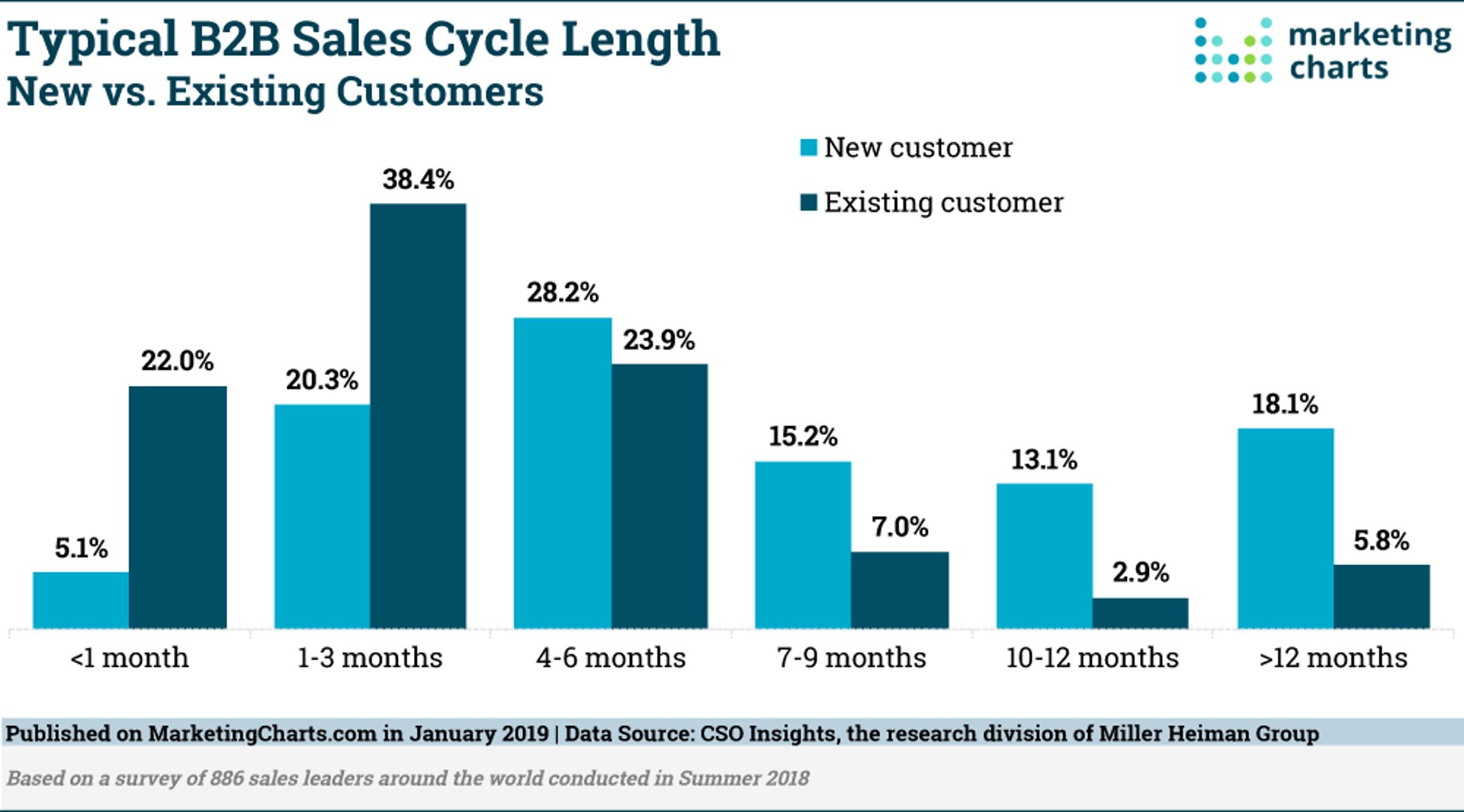
75% of B2B companies take an average of at least 4 months to win a new customer. Additionally, the average SaaS B2B sales cycle length is 83 days, according to a 2020 study by Hubspot.
Sales Cycle Length benchmarks
Average Sales Cycle Length
How to visualize Sales Cycle Length?
Your Sales Cycle Length data works best when you compare it as a single number, usually represented in months, with a previous period of time. For example: say you built your dream sales team six months ago, and they're incredibly fast at closing deals. You can motivate your team by showing the change in average Sales Cycle Length compared to six months ago - it's bound to have decreased thanks to their efforts!
Sales Cycle Length visualization example

Summary Chart
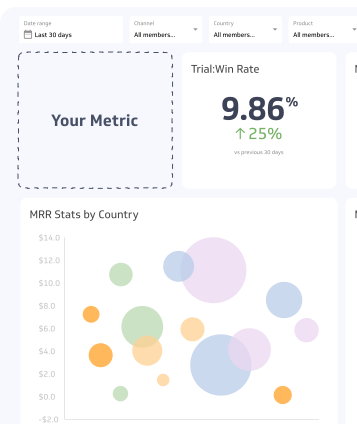
Here's an example of how to visualize your current Sales Cycle Length data in comparison to a previous time period or date range.
More about Sales Cycle Length
Sales Cycle Length measures the average amount of time it takes to convert prospective customers to won customers. Known as the sales pipeline, the journey from prospect to lead to paying customer involves four key stages: Awareness, Intent, Desire, and Action. These stages (known as the AIDA model) when successfully completed, signal the end of your sales cycle - which then moves towards post-sales and support.
Sales cycles are generally longer for complex, enterprise solutions with a higher selling price, when selling to new customers versus to existing customers, and when selling into new markets.
Given where your business sits on this spectrum, a shorter sales cycle is not necessarily better. Instead, you want to understand the various factors at play in your specific sales cycles to determine the standard range for your context. From there you can take steps to optimize each stage.
Tracking this metric is important for setting sales targets and forecasting revenue. Other benefits include having a robust picture of the time, effort, and resources required on average to win each customer.
If your Sales Cycle Length is longer than average, you may need to look into improving your sales processes. Reasons for abnormally long Sales Cycle Length include poorly qualified leads, insufficient sales training, inappropriate sales channels, insufficient sales enablement assets, or a free trial period that is too long.
Sales Cycle Length Frequently Asked Questions
Why is a shorter sales cycle good?
Short sales cycles mean that you're winning customers fast. In almost every scenario, you want to close a deal as soon as possible because it indicates your product is something customers prioritize and you want to limit the time, money, and resources spent on closing the deal. Balance this by keeping tabs on your churn: short sales cycles should not blind you to potential revenue leakage.