

Video Views is a count of the number of times a video is watched or started. Because each platform defines a "view" differently, raw counts are only meaningful in context.
A brand publishes a 60-second product video on YouTube and a 15-second version on Instagram. After one week:
- YouTube records 4,200 views. Each view represents at least 30 seconds watched (or a like, comment, share, or dislike on a shorter clip).
- Instagram records 11,500 views. Each view represents at least 3 seconds watched.
The Instagram number is larger, but the two counts are not directly comparable. The YouTube viewer watched more of the video before the platform registered a view. Comparing them without accounting for platform methodology will overstate Instagram's relative performance.
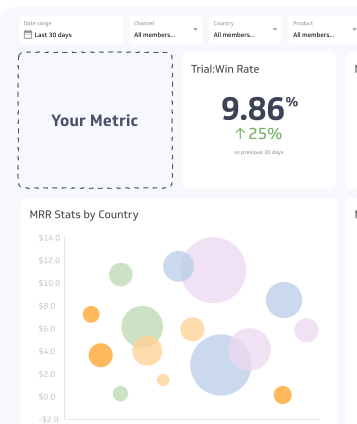
You can start with a basic summary chart to visualize your Video Views data. This chart displays the current value that you can then compare to a previous period.
How platform methodologies shape the number
Video Views is one of the more subjective digital metrics in use. The formula is a simple count, but what triggers that count varies by platform. Treating views from different platforms as equivalent leads to flawed comparisons.
Here is how major platforms define a standard view as of 2024:
| Platform | View threshold |
|---|
| YouTube | 30 seconds watched, or an engagement (like, comment, share, dislike); shorter videos count on completion |
| Facebook | 3 seconds watched |
| Instagram | 3 seconds watched |
| LinkedIn | 2 seconds watched, with at least 50% of the player in view |
| Snapchat | 2 seconds watched |
| TikTok | Any playback start (including autoplay) |
| X (platform) | 2 seconds watched, with at least 50% of the player in view |
Platforms can and do change these thresholds without notice. Always verify against the platform's current documentation before drawing conclusions from view counts.
Paid and third-party view counts may also differ from organic counts on the same platform. A video served as a paid ad often applies a different measurement standard than one discovered organically.
What Video Views actually tells you
On its own, Video Views is a reach metric. It tells you how many times a video was started or watched past a minimum threshold. It does not tell you whether viewers found the content useful, whether they watched to the end, or whether they took any action afterward.
Think of it like a page view on a website: it signals exposure, not engagement.
Video Views becomes more useful when read alongside:
Video Watch Time: Total minutes watched. A high view count with low watch time suggests viewers are dropping off early.
View-through rate: The percentage of viewers who watched to completion. Useful for evaluating whether the content held attention.
Retention rate: Shows where in the video viewers stopped watching, which helps identify weak points in the content.
Engagement rate: Likes, comments, shares, and saves as a proportion of views. Signals whether the content prompted a response.
Using Video Views alongside these metrics gives a more complete picture of video performance than the count alone.
Common pitfalls
Comparing counts across platforms. Because view thresholds differ significantly (a TikTok autoplay versus a 30-second YouTube view), cross-platform comparisons require careful qualification. Aggregate totals can be misleading.
Treating views as proof of impact. A high view count on a platform with a 2-second threshold may reflect autoplay behaviour more than genuine interest. Pair views with watch time or completion rate to assess real engagement.
Ignoring paid versus organic splits. Paid distribution inflates view counts. If you are evaluating organic content performance, separate paid and organic views before drawing conclusions.
Missing methodology changes. Platforms update their definitions. A sudden spike or drop in views may reflect a platform change rather than a shift in content performance. Check official documentation when numbers move unexpectedly.
Related metrics
Video Watch Time
View-through rate
Retention rate
Engagement rate
Impressions