What is Payroll Expenses?
Payroll Expenses represents the total cost incurred by a business to compensate its employees and independent contractors. This includes direct payments such as salaries, wages, and bonuses, as well as associated costs like employer-paid taxes, health insurance premiums, retirement contributions, and other benefits. This metric is a key indicator of a company’s operational costs and is typically a significant portion of a business’s overall expenses. Understanding Payroll Expenses is crucial for financial planning, budgeting, and evaluating profitability
Payroll Expenses Formula
How to calculate Payroll Expenses
Let's imagine "The Urban Cafe", a small coffee shop. In a given month, they have the following costs:
- Salaries and wages for all baristas: $15,000
- Overtime for the busy weekend shifts: $1,000
- Employer's portion of payroll taxes (CPP, EI): $1,200
- Employer's contribution to employee health benefits: $800
- Payment to a freelance accountant who is a contractor: $500
Using the formula, we can calculate The Urban Cafe's total payroll expenses for the month:
Payroll Expenses = $15,000 + $1,000 + $1,200 + $800 + $500 = $18,500
This $18,500 figure would be recorded as the total payroll expense for that month in their financial statements.
Start tracking your Payroll Expenses data
Use PowerMetrics, modern analytics platform, to monitor your data. Choose a service below to start tracking your Payroll Expenses instantly.

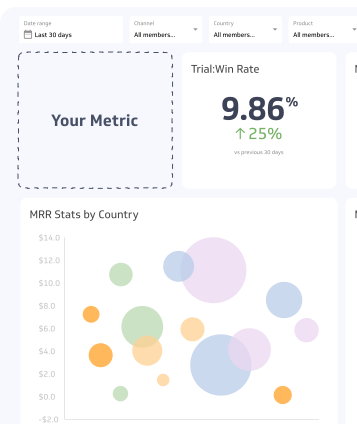
How to visualize Payroll Expenses?
You have several options to visualize your Payroll Expenses data. If you want to segment this data by department or year, choose a pie chart or bar chart. Line charts can help you see an increase or decrease in expenses yearly or monthly. Finally, a summary chart or metric view shows you the current value of the metric that you can then compare to a previous period of time. Take a look at the examples:
Payroll Expenses visualization examples
Payroll Expenses

Pie Chart
Here's an example of how to visualize your Payroll Expenses data in a pie chart to identify the most prominent segment.
Payroll Expenses
Bar Chart
Here's an example of how to visualize your Payroll Expenses data in a bar chart to observe segmented data.
Payroll Expenses
Line Chart
Here's an example of how to visualize your Payroll Expenses data in a line chart over time.
Summary Chart
Here's an example of how to visualize your current Payroll Expenses data in comparison to a previous time period or date range.
More about Payroll Expenses
Payroll Expenses are a fundamental component of a company’s financial health and are essential for strategic decision making. A comprehensive view of these expenses goes beyond just the salaries paid to staff. It includes all the costs directly tied to having people on the payroll. This includes statutory contributions such as Canada Pension Plan (CPP) and Employment Insurance (EI) in Canada, or Social Security and Medicare taxes in the United States, as well as workers’ compensation and unemployment insurance. Beyond these mandatory costs, businesses often provide benefits that are also part of payroll expenses. These can include group health, dental, and life insurance plans, and contributions to retirement savings plans like a Registered Retirement Savings Plan (RRSP) or a 401(k).
The distinction between employees and independent contractors is important for managing payroll expenses. For employees, a business is responsible for withholding income tax and making employer-side contributions to various government programs and benefits. For independent contractors, the business typically pays a pre-negotiated fee for services rendered, and the contractor is responsible for their own taxes and benefits. This distinction affects the total payroll expense and has significant implications for tax compliance and legal responsibilities.
From an accounting perspective, Payroll Expenses are generally recorded under the accrual method. This means that expenses are recognized when they are incurred, not when they are paid. For example, a business would accrue for the salaries earned by employees in December, even if they are paid in January. This provides a more accurate view of a company's financial performance by matching the cost of labour to the revenue it helps generate within the same accounting period.
Analysing Payroll Expenses in relation to revenue is a common practice to assess labour efficiency. A high ratio of payroll expenses to revenue could indicate that a business is overstaffed or that its labour costs are not aligned with its earnings. Conversely, a very low ratio might suggest that the business is understaffed, which could lead to employee burnout or a decline in service quality. Tracking these expenses over time helps businesses forecast future costs, set budgets, and make informed decisions about hiring, layoffs, or automation.
Payroll Expenses Frequently Asked Questions
How do payroll expenses differ from operating expenses?
Payroll expenses are a type of operating expense. Operating expenses include all costs incurred in the day-to-day running of a business, such as rent, utilities, and office supplies, in addition to payroll.
Why is the distinction between employees and contractors important for payroll expenses?
The distinction is crucial for tax and legal reasons. Businesses are required to withhold income tax and make employer-side contributions for employees, whereas contractors are responsible for their own tax and benefit obligations.
How can a business manage its payroll expenses more effectively?
Managing payroll expenses involves strategies such as optimizing staffing levels, controlling overtime, offering a competitive but not excessive benefits package, and regularly reviewing contracts with independent contractors.