Burn Multiple is a capital efficiency metric that measures how many dollars a startup burns (spends) to generate each dollar of net new Annual Recurring Revenue (ARR). Calculated as Net Burn divided by Net New ARR, this metric evaluates the cost-effectiveness of revenue growth. A higher Burn Multiple indicates the company is spending more capital per dollar of growth, while a lower Burn Multiple indicates more efficient, capital-efficient growth.
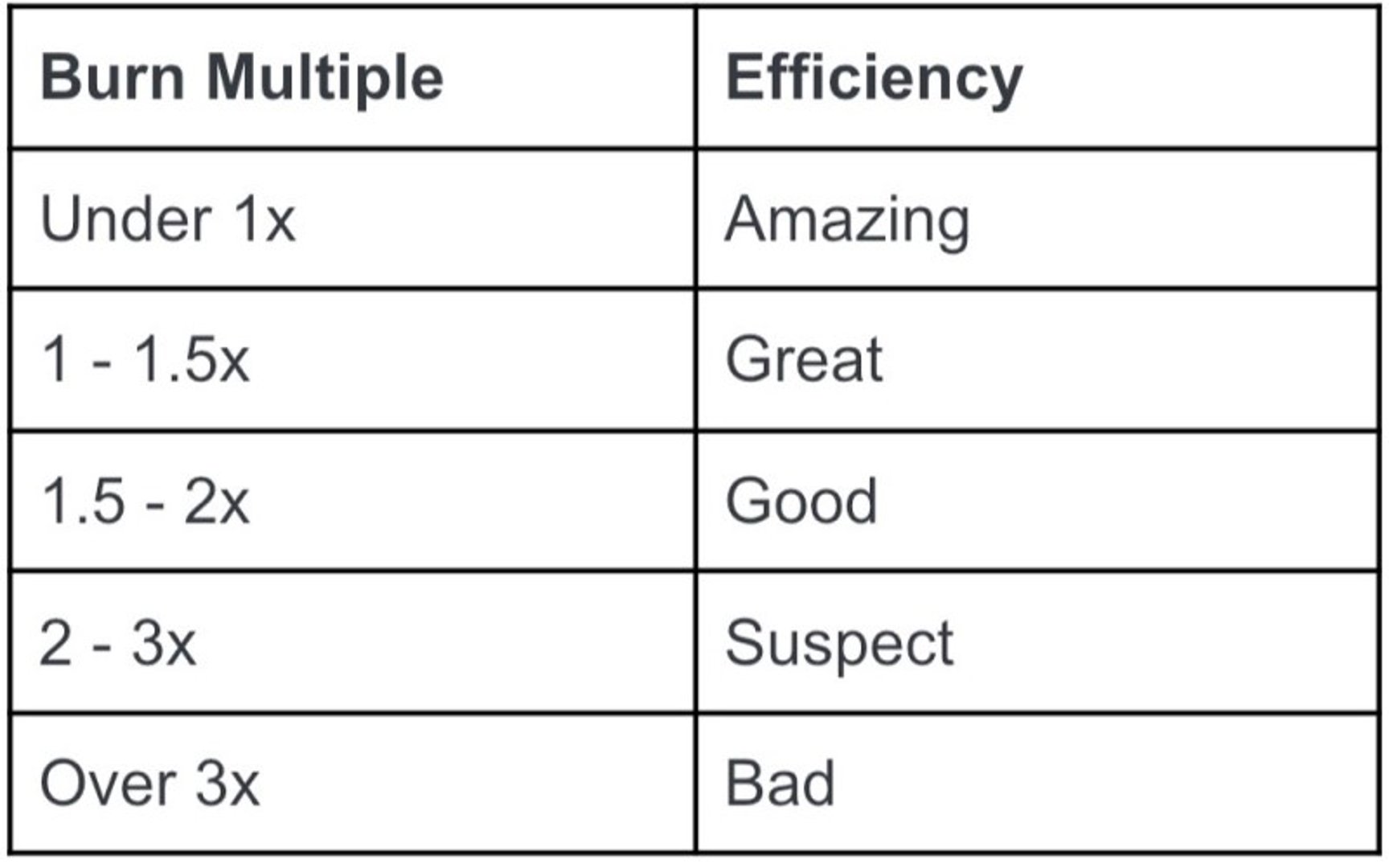
A startup ends Q1 having burned $2M (net cash decrease from operations) while adding $1M in net new ARR. The Burn Multiple is $2M / $1M = 2.0x—reasonable for early-stage companies.
If another company burned $5M to add $1M net new ARR, that's a 5.0x Burn Multiple—signaling serious efficiency problems. This company is spending like a growth-stage business without delivering commensurate growth and should likely reduce costs immediately.
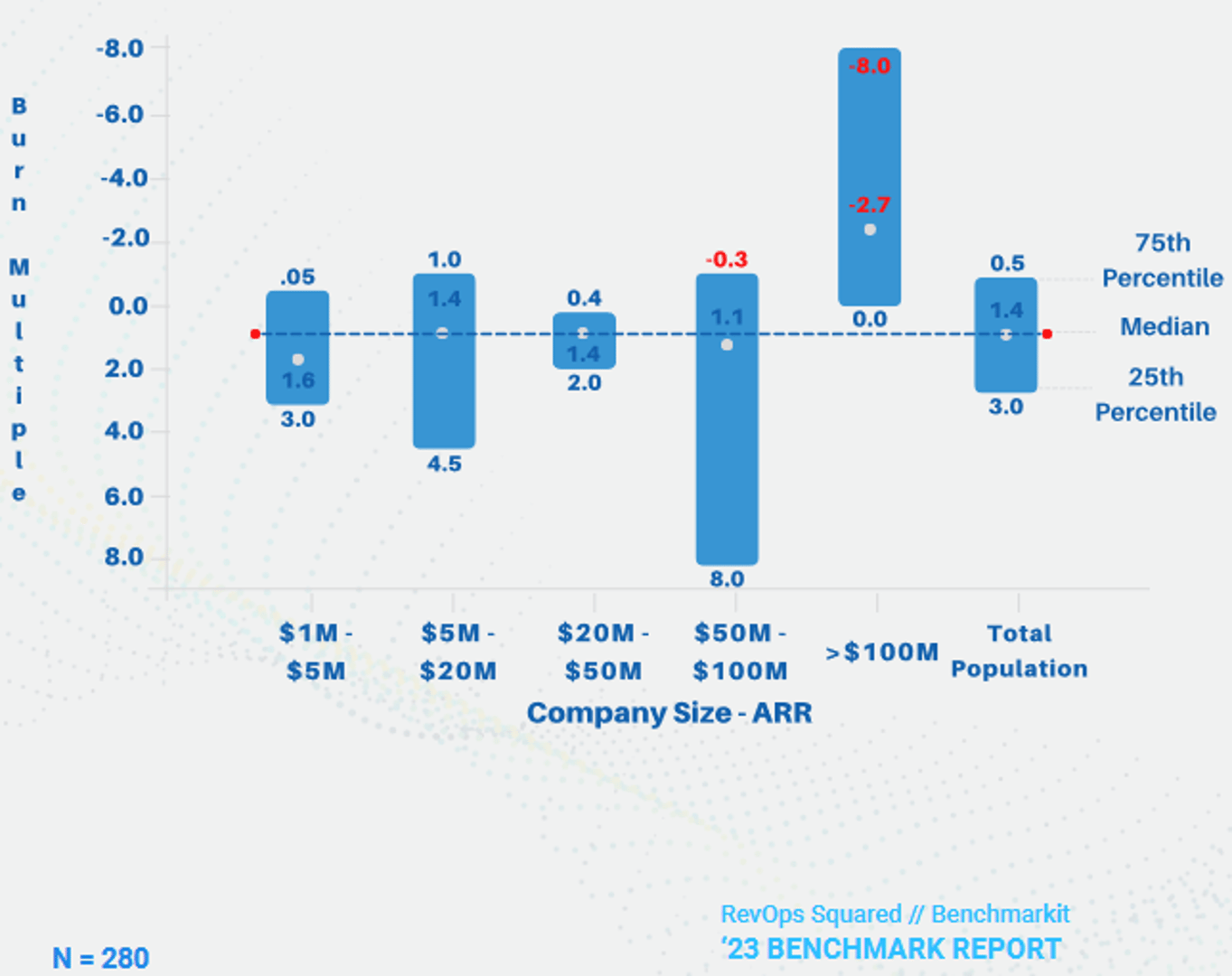
For SaaS companies by ARR stage (median Burn Multiple):
$1-3M ARR: 1.7x
$3-5M ARR: 1.0x
$5-10M ARR: 0.65x
$10-15M ARR: 0.85x
Source: Capchase 2022, n=439
Note: The slight increase at $10-15M ARR may reflect increased investment in scaling operations and go-to-market infrastructure as companies prepare for later-stage growth.
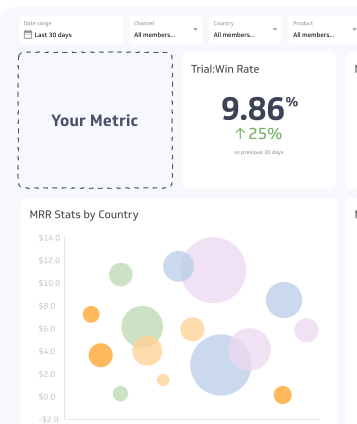
A summary chart is the best way to visualize Burn Multiple. Summary Charts display the current value in comparison with the past. Take a look at the example:
Venture capitalists use Burn Multiple to assess the quality of product-market fit and the sustainability of growth. A startup that generates $1M in net new ARR while burning $2M (2x Burn Multiple) demonstrates stronger product-market fit than one burning $5M for the same growth (5x Burn Multiple). In the former case, efficient growth suggests the market is "pulling" the product, while the latter suggests the company is "pushing" expensive customer acquisition.
The power of Burn Multiple lies in its comprehensiveness—it's a catch-all metric that captures operational efficiency across the entire business. Any significant problem (poor sales efficiency, high churn, operational bloat, ineffective marketing) will eventually surface in the Burn Multiple by increasing burn, decreasing net new ARR, or both.
Important Considerations:
- Pre-revenue companies: When net new ARR is zero or negative, the Burn Multiple becomes undefined or negative. In these cases, focus on minimizing burn and achieving initial revenue ("crossing the Penny Gap") as quickly as possible.
- Mature companies: As startups scale and approach profitability, the Burn Multiple should trend toward zero. At breakeven, burn reaches $0, making the Burn Multiple 0.
- Seasonal variations: Calculate Burn Multiple over consistent periods (typically quarterly) and watch for trends rather than single data points.
- Context matters: A high Burn Multiple may be acceptable temporarily if the company is investing strategically in growth infrastructure, but sustained high multiples signal inefficiency.