
Subscribers

Last updated: Aug 17, 2026

What is Subscribers

Subscribers counts the number of paid or non-paid users with active, periodic access to a product or service. The metric applies to subscription-based business models including SaaS, media, telecommunications, and entertainment, and captures total access holders at a point in time regardless of payment status.

Alternate names: Customers, Users

Subscribers Formula

ƒ Count(Subscribers)

How to calculate Subscribers

A SaaS company ends the quarter with 4,200 paid subscribers and 1,800 freemium (non-paid) subscribers, for a total of 6,000 subscribers.

Formula: Count(Subscribers) = 4,200 + 1,800 = 6,000

The paid-to-freemium ratio (70/30) matters as much as the total. A high freemium proportion signals conversion opportunity; a high paid proportion signals stronger monetization.

Start tracking your Subscribers data

Use PowerMetrics, modern analytics platform, to monitor your data. Choose a service below to start tracking your Subscribers instantly.

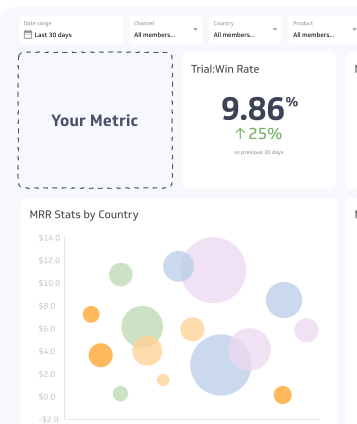
PowerMetrics Dashboard

How to visualize Subscribers?

Use a summary chart to visualize your Subscribers data and compare it to a previous time period.

Subscribers visualization example

Subscribers

165

arrow-right icon

7.64

vs previous period

Summary Chart

Here's an example of how to visualize your current Subscribers data in comparison to a previous time period or date range.
arrow-right icon
arrow-right icon

Subscribers

Chart

Measuring Subscribers

More about Subscribers

Paid vs. non-paid subscribers

Not all subscribers contribute equally to revenue. Many SaaS, gaming, and media companies use a freemium model, where a large base of non-paid users coexists with a smaller paid tier. Behaviours, engagement levels, and lifetime value differ significantly between the two groups.

Tracking paid and non-paid subscribers separately helps teams:

  • Measure conversion rates from free to paid tiers
  • Assess product stickiness among non-paying users
  • Forecast revenue accurately without inflating the paid base

Reporting total subscribers without this distinction can obscure monetization performance.

Subscriber access models

Subscribers may access a product or service through several structures:

Access modelDescription
Auto-renewingAccess renews automatically each billing cycle until cancelled
Fixed-termAccess expires after a set period unless manually renewed
Usage-basedAccess continues until a usage threshold is reached
Pay-as-you-goAccess is granted per transaction or consumption event

Understanding which model applies shapes how you count active subscribers and when you recognize churn.

Related subscriber metrics

Subscription businesses typically report on three related metrics alongside total subscribers:

  • New Subscribers: Accounts added during a period
  • Active Subscribers: Accounts with confirmed, ongoing access
  • Cancelled or Churned Subscribers: Accounts that ended access during a period

Paired with revenue metrics like Monthly Recurring Revenue (MRR) or Average Revenue Per User (ARPU), total subscribers provides a complete picture of business health.

Best practices for tracking subscribers

Segment from the start. Distinguish paid, freemium, and trial subscribers in your reporting. Mixing them makes conversion and retention analysis unreliable.

Define "active" clearly. A subscriber who has not logged in for 90 days may still be counted as active if their subscription has not lapsed. Decide whether your definition is access-based or engagement-based, and apply it consistently.

Track cohorts over time. Aggregate subscriber counts hide retention patterns. Cohort analysis shows how groups of subscribers acquired in the same period behave over months or years.

Reconcile with revenue metrics. If subscriber count grows but MRR stays flat, investigate plan mix, downgrades, or an increase in non-paid accounts.

Common challenges

Double-counting accounts. One individual may hold multiple accounts or subscriptions. Decide whether to count unique individuals or unique accounts, and document the choice.

Defining the measurement period. Subscribers at the start of a period, end of a period, or an average across a period can all yield different numbers. Consistency in methodology matters more than which method you choose.

Freemium inflation. A large freemium base can make total subscriber growth look strong while paid growth stagnates. Always report paid subscribers as a separate line.

Subscribers Frequently Asked Questions

What is the difference between paid and non-paid subscribers?

arrow-right icon

Paid subscribers have an active billing relationship with the business. Non-paid subscribers access a free or freemium tier. The two groups differ in revenue contribution, engagement behaviour, and lifetime value, so tracking them separately is essential for accurate reporting.

How is total subscribers different from active subscribers?

arrow-right icon

Total subscribers counts all accounts with current access, including those who may not be actively using the product. Active subscribers applies an engagement or login threshold to filter for accounts that are genuinely using the service during the measurement period.

Why do subscription businesses track new, active, and churned subscribers separately?

arrow-right icon

Each segment reveals a different aspect of growth. New subscribers measure acquisition. Active subscribers measure retention and engagement. Churned subscribers measure loss. Together they explain net subscriber movement and inform decisions across marketing, product, and customer success.